Quick answer: To renounce your Singapore PR, you submit a renunciation application through the ICA e-Service, surrender your NRIC and re-entry permit, and collect a letter confirming you are no longer a permanent resident. Clear any National Service and tax matters first, then you can close your CPF account and withdraw your savings.
Giving up permanent residence is a bigger decision than most people expect. It is not something that happens with a quick email, and it is not the same as simply letting your status lapse. Renouncing your Singapore PR is a formal process run by the Immigration and Checkpoints Authority, and getting the order of steps right saves you from problems with your CPF, your National Service records, and any future plans to return. This guide walks through what renunciation means, how the ICA process works in 2026, and what to settle before you apply.
What does it mean to renounce your Singapore PR?
Renouncing your Singapore PR means voluntarily giving up your permanent resident status. Once it is approved, you go back to being a foreigner in the eyes of the law. You lose the right to live and work in Singapore without a pass, the ability to buy a resale HDB flat, and your PR standing for CPF. You also have to enter Singapore on your foreign passport from then on, like any other visitor.
This is different from losing your PR by accident. If your re-entry permit expires while you are overseas, your status can lapse on its own without any application. Renunciation, by contrast, is a deliberate step you take while you still hold valid status, usually because your life has moved elsewhere. Before you decide, it is worth weighing the benefits of being a Singapore PR against your actual plans for the next few years, because the status is far harder to get back than to give up.
Common reasons people give up Singapore PR
Most people who renounce do so because they have settled permanently in another country and no longer spend meaningful time in Singapore. Others plan to take up Singapore citizenship or another citizenship, and some nations require you to give up competing residencies. A smaller group renounces for family or financial reasons, often tied to withdrawing their CPF once they have left for good.
Whatever the reason, the choice is rarely reversible in practice. A future move back to Singapore would mean applying from scratch, so it pays to be sure before you start. If your only worry is spending time abroad, there may be a simpler answer than giving everything up, which we cover below.
How to renounce your Singapore PR: the ICA process step by step
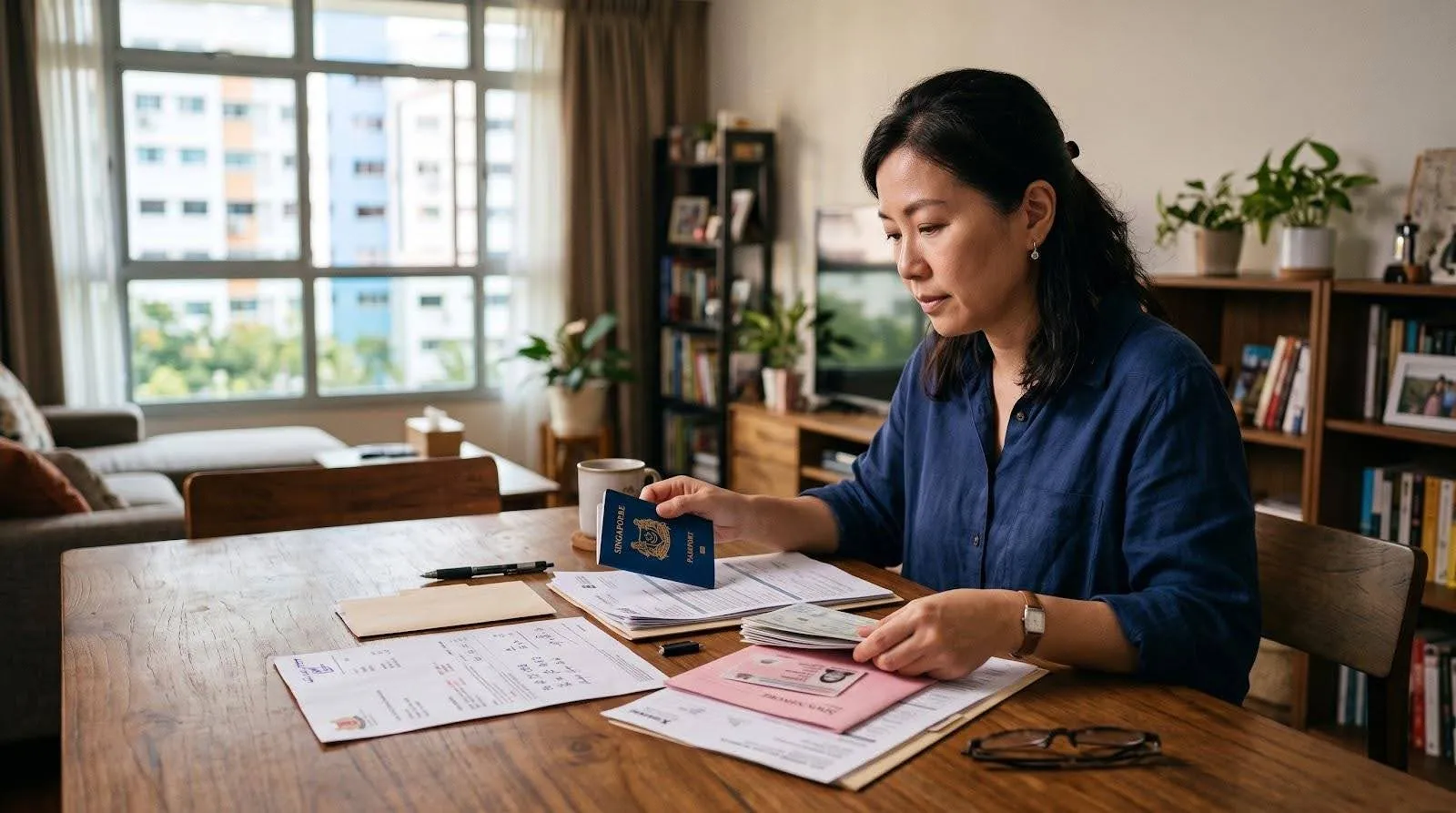
- Step 1. Prepare your documents. You will need your NRIC, your Entry Permit, your valid re-entry permit, and your travel document. If you are renouncing because you have taken up another citizenship or residence, have that proof ready too.
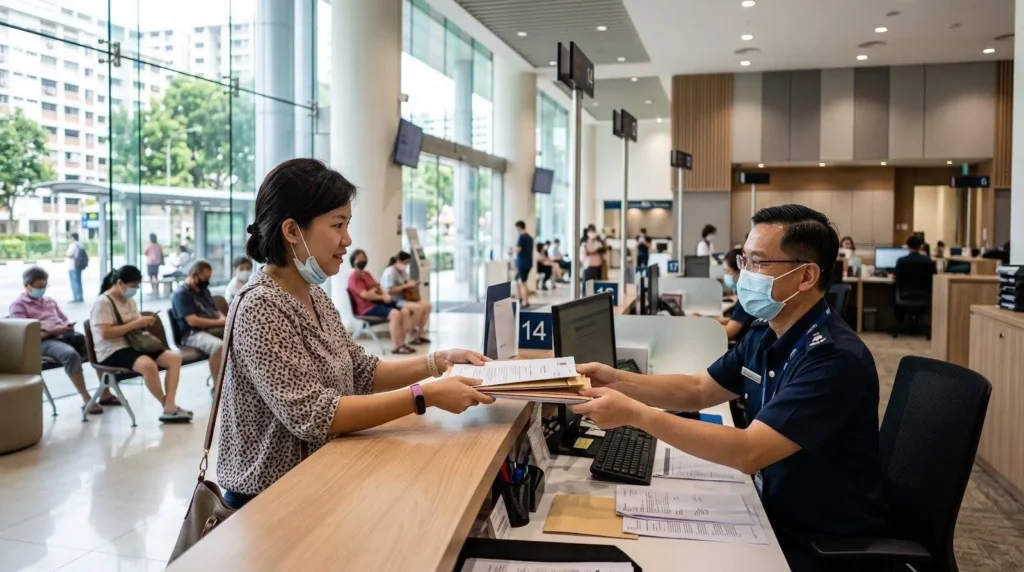
- Step 2. Submit the renunciation application through the ICA e-Service. The whole application is done online, and you do not post physical forms. You will confirm your details and the reason for renouncing, and upload the supporting documents.
- Step 3. Wait for ICA to assess it. ICA can withhold or reject a renunciation if you have unresolved matters with government agencies or outstanding National Service obligations, so these need to be cleared first. Processing time varies with your circumstances.
- Step 4. Complete the surrender and collect your letter. Once approved, you surrender your NRIC and re-entry permit, and ICA issues a letter confirming that you are no longer a Singapore permanent resident. Keep that letter safe, because you will use it to settle your CPF and to prove your change in status later.
If you are already overseas, you still apply through the same ICA e-Service, and a Singapore overseas mission can guide you on surrendering your documents from abroad.
What happens to your CPF when you renounce PR
This is the part most people care about, and the rules changed recently in your favour. From 1 April 2024, once your renunciation is complete you may apply to close your CPF account and receive your savings straight away. You no longer need to obtain a separate verification letter from ICA before withdrawing, which used to add weeks to the process.
You make the CPF closure and withdrawal request through your CPF account online. Because you can only do this after renunciation is finalised, the sensible order is always to complete the ICA process first, then deal with CPF, rather than the other way around.
Re-entry permit, National Service and other things to settle first
If your real concern is that you will be spending long stretches outside Singapore, you may not need to renounce at all. In many cases it is better to renew your re-entry permit and keep your status alive, rather than lose the years you spent qualifying. Renunciation should be a decision, not an accident.
National Service is the single biggest complication. Male PRs, and especially second-generation PRs, can carry NS liability, and ICA may withhold a renunciation where NS duties are outstanding. Renouncing in a way that is seen as avoiding NS can also count against the person, and against their family, in any future application for PR, citizenship, or even work and study passes. If NS is part of your situation, get proper advice before you file anything.
Finally, tidy up the rest. Settle your taxes with IRAS, deal with any HDB flat you own within the period the rules allow, and close off other local commitments so nothing holds up your application.
Can you apply for Singapore PR again after renouncing?
Yes. There is no rule that permanently bars you from coming back. If your plans change, you can submit a fresh Singapore PR application, and it will be assessed on its merits like any other. That said, a past renunciation is part of your record, and one tied to avoiding National Service in particular can weigh against a later application. Treat renunciation as a clean, well-documented exit so that any future return starts on the best possible footing.
Getting your Singapore PR renunciation right
Renouncing your PR is straightforward on paper, but the sequence matters. Clear your National Service and tax matters, submit through the ICA e-Service, surrender your documents, collect your letter, then close your CPF. Rushing it or skipping a step is what turns a simple exit into a drawn-out one.
If you are unsure whether renouncing or renewing is the right move for your family, reach out to us before you apply and we will walk you through the trade-offs for your specific situation. Singapore Immigration Consultancy has guided many families through both keeping and giving up PR, so you can make the call with a clear picture rather than a guess.
Not sure whether to renounce or hold on to your PR? Speak to our consultants first and decide with the full picture.
Frequently Asked Questions About Renouncing Singapore PR
How long does it take to renounce Singapore PR?
There is no fixed timeline. Once you submit through the ICA e-Service, processing depends on your circumstances and whether you have any outstanding matters. Clearing National Service and tax issues beforehand is the best way to avoid delays.
Can I withdraw my CPF after renouncing my PR?
Yes. From 1 April 2024, once your renunciation is complete you can apply to close your CPF account and withdraw your savings straight away, and you no longer need a separate verification letter to do so.
Do I need to serve National Service before I can renounce my PR?
National Service obligations must be addressed first. ICA may withhold a renunciation where NS duties are outstanding, and renouncing to avoid NS can affect future applications for you and your family, so get advice if this applies to you.
What is the difference between renouncing and losing my PR?
Renouncing is a formal, voluntary application made while you still hold valid status. Losing your PR happens automatically when your re-entry permit expires while you are overseas, and in that case no renunciation application is needed.
Can I apply for Singapore PR again after giving it up?
Yes, you can submit a fresh PR application at any time. It will be assessed on its own merits, though a previous renunciation, especially one linked to National Service, may be taken into account.